|
|
 |
|
|
| |
Vintage
Baseball Glove Dating Guide |
|
|
|
1880 - 1899 Gloves & Mitts |
|
|
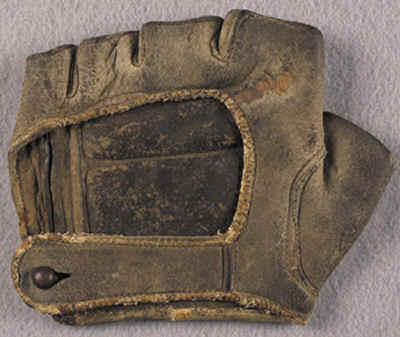
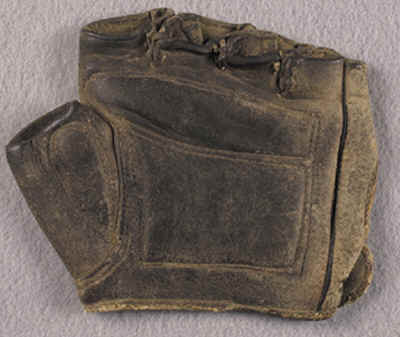
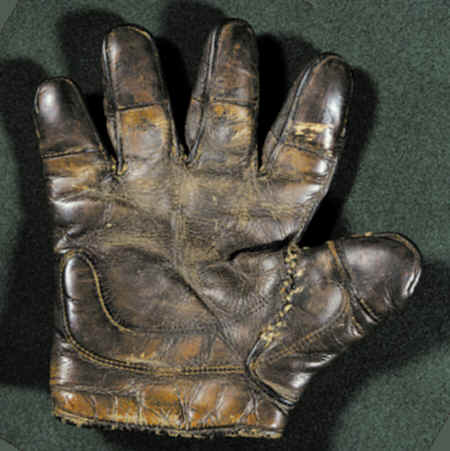
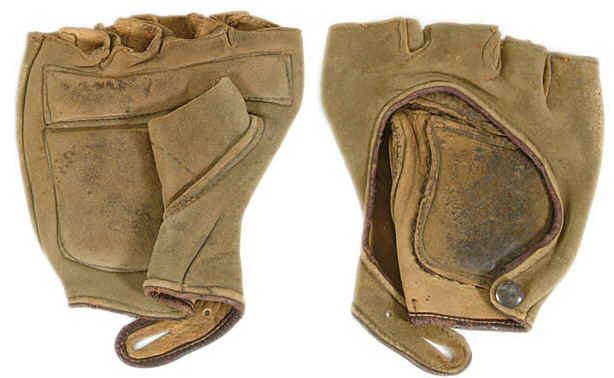
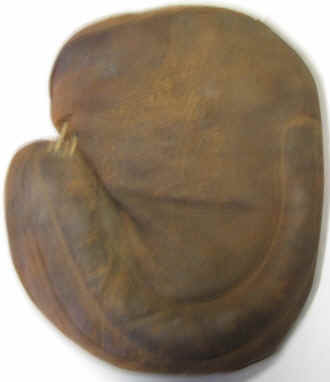
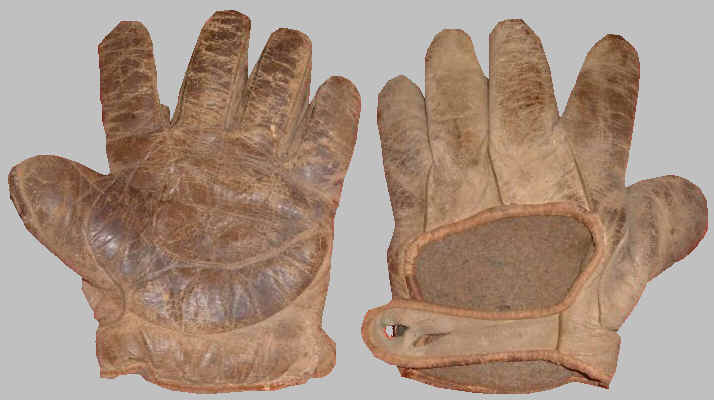
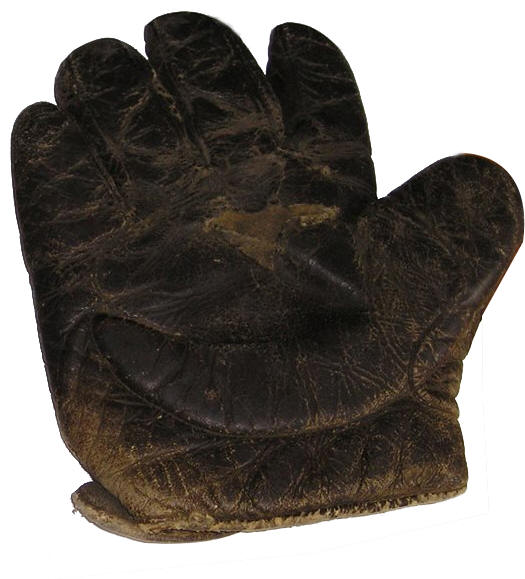
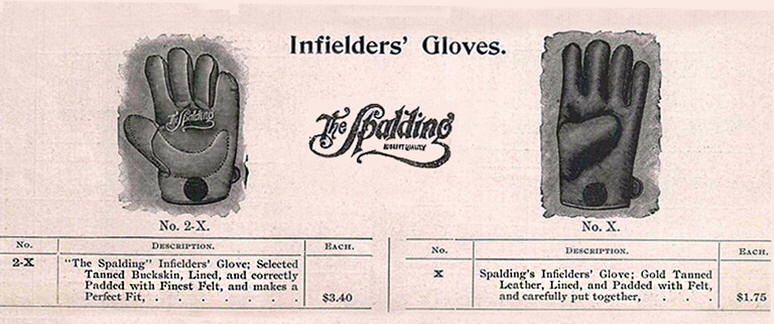
Gloves have no web and are referred to as "workman" style
gloves. Early fingerless gloves were used for better grip.
Many early baseball gloves were simple leather gloves with the
fingertips cut off.
|
|
|
|
Early Baseball Glove History
|
| The
first recorded instance of any player using a baseball glove
dates to the season of 1869, when Cincinnati Red Stockings
catcher Doug Allison first experimented with the idea by
having a glove made for him by a local saddle maker. At that
time, however, it was considered “unmanly” for players to
seek protection for one’s hands and the use of a glove was
considered a sign of weakness. In 1875 Charles Waite of the
St. Louis Brown Stockings became the first fielder to wear a
fingerless glove. Unfortunately for him, he was the subject of
intense ridicule by not only the opposing players and fans,
but by his own teammates as well. Obviously, the timing was
not right for the widespread acceptance of baseball gloves. It
would take a few more years, along with a significant rule
change, before the use of gloves became accepted. In the 1880s
a rule was passed that made even the most "manly" of
players consider using gloves: pitchers were now allowed to
throw overhand. With the speed of pitches now greatly
increased, balls were being thrown with alarming force to
catchers, and struck with much greater force by batters. Valor
quickly gave way to discretion. That decade witnessed players
adopting the use of a tight fingerless glove for use in the
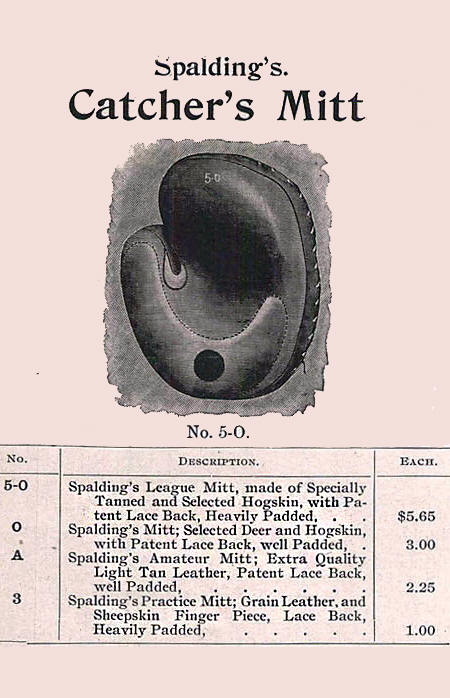
field. Catchers normally wore a pair of gloves on their hands
during that era, as they were clearly in the most vulnerable
position with regard to hand injuries. The fingerless glove
would be worn on the throwing hand.
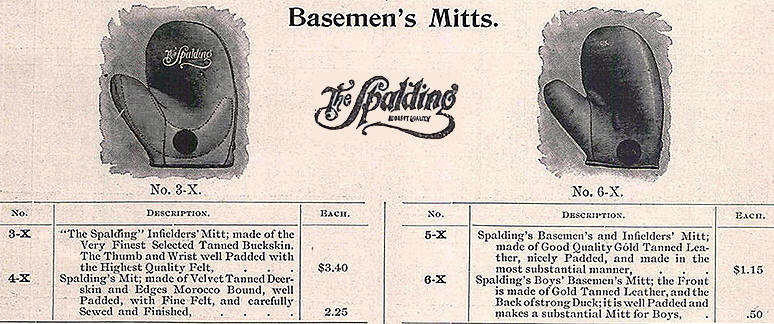
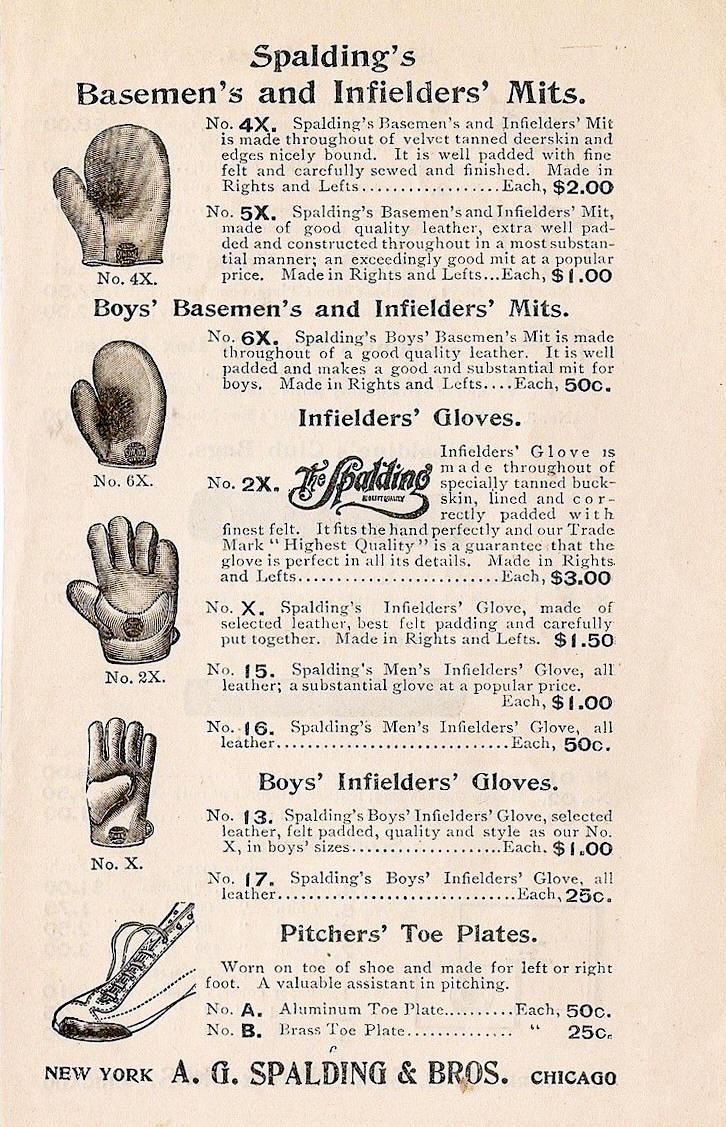
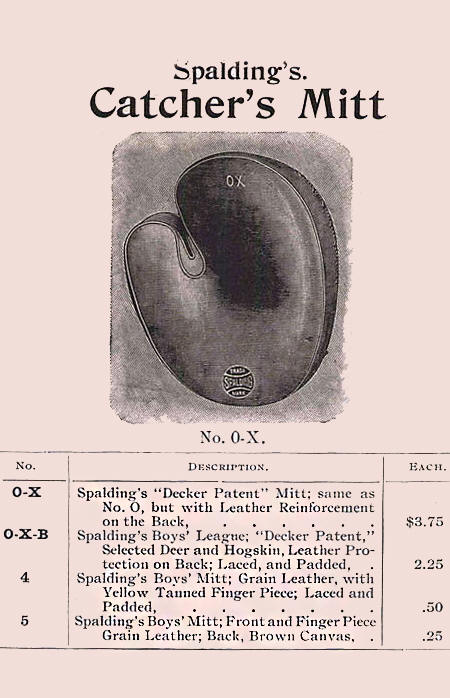
The adoption of the baseball glove by baseball star
Albert Spalding when he began playing first base influenced more infielders to begin using gloves.
In 1871, Spalding joined the Boston Red Stockings (precursor club to the modern Atlanta Braves) and was highly successful; winning 205 games (and losing only 53) as a pitcher and batting .323 as a hitter. After the NA folded, he joined the Chicago White Stockings of the newly formed National League in 1876, winning 47 games as the club captured the league's inaugural pennant. Spalding retired from baseball two years later.
Retired from the game, he and his brother opened a sporting goods store in Chicago, obtaining the rights to produce the official National League
ball. Alfred James Reach one of the early stars of baseball in the National Association. Similar to Al Spalding, Reach formed a sporting goods company and earned millions. In fact, he sold his company to Spalding in 1889.
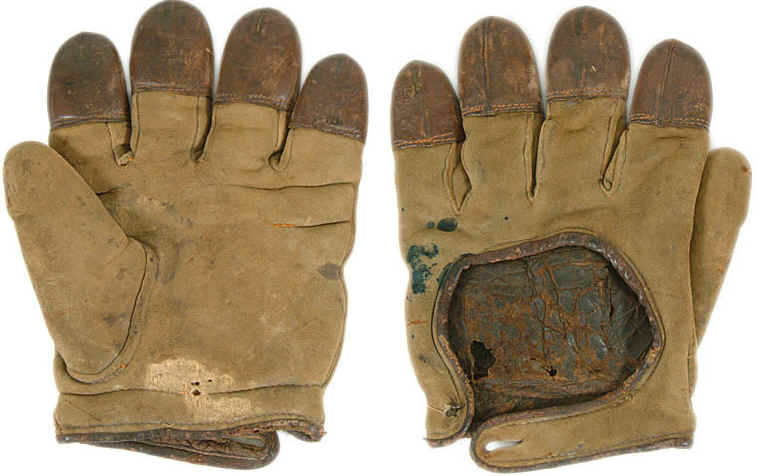
Reach sporting goods one of the first Manufacturers of
Baseball gloves. Above are replica Baseball Gloves made by the
Reach Sporting goods company.
|
|
|